

Wiggle
NRB Tech's own home energy app, bringing a household's supplier account, smart meter and connected devices into one trustworthy view of electricity use, tariffs and costs.
Services Provided
Technologies
Overview
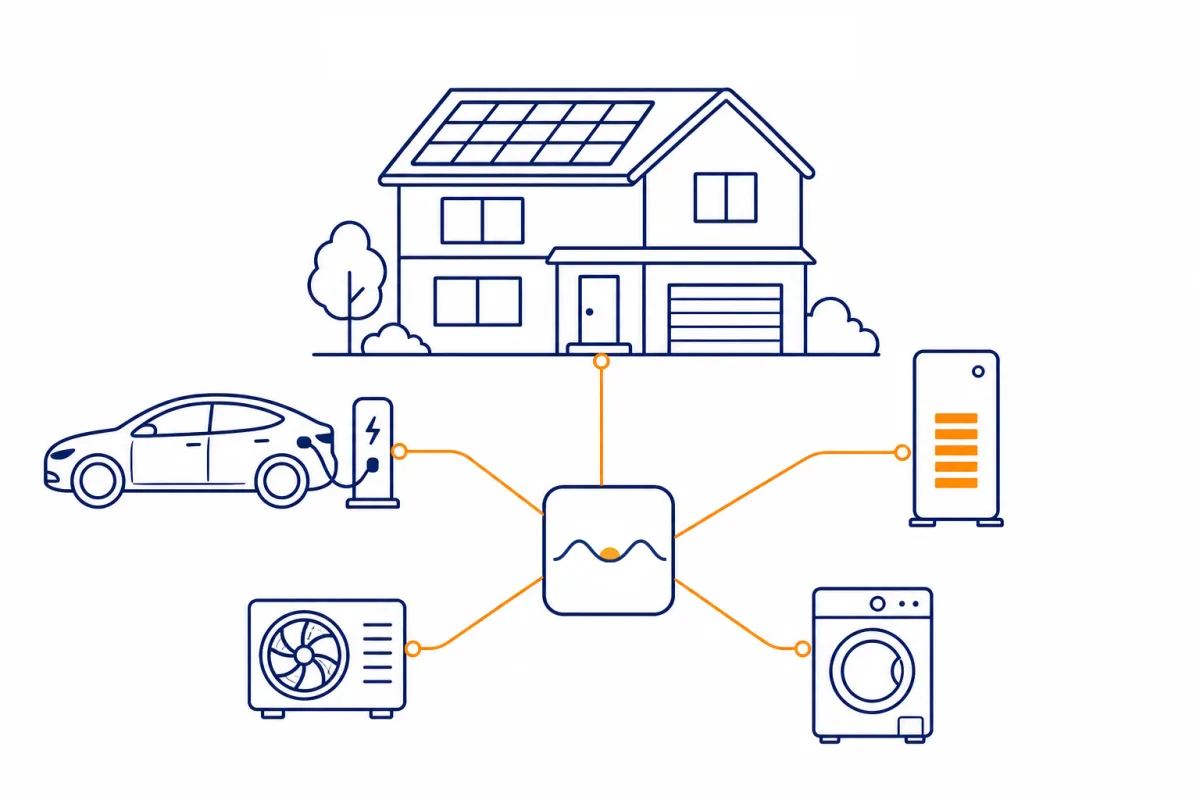
Wiggle™ is a home energy app developed and operated by NRB Tech. It brings together a household’s energy supplier account, smart-meter readings and connected devices, such as electric vehicles, chargers, home batteries and solar inverters, and explains electricity use, tariffs and costs in one place.
Wiggle is NRB Tech’s own product and is in beta on iPhone. It is built and run with the same practices we apply to client work.
What Was at Risk
A household energy app holds data that reveals when people are at home, and shows figures that people use to make decisions about money. If a cost is wrong or data is exposed, trust is lost immediately. Where an app can also change how a car charger, battery or heating system behaves, a fault has physical consequences in someone’s home.
The platform also depends on services outside our control: supplier APIs, device platforms and manufacturer clouds, each with its own delays, gaps and failure modes.
Key Decisions
- Evidence before estimates — Supplier and device data is kept as an append-only record. Figures are labelled as measured, modelled or estimated, and when a source is late or unavailable the app says so rather than filling the gap silently.
- Security from the first account — Passkeys and Sign in with Apple, verified email recovery, and strict separation between households on a shared platform.
- Separate environments — Production and staging run on their own UK servers, with separate databases, credentials, keys and backups.
- Recovery that is proven, not assumed — Encrypted backups are held off-site, and restoring from them, including honouring account erasure after a restore, is rehearsed as a scripted drill.
- Changes only on the household’s instruction — Where Wiggle can change a device, a household member starts every change, with explicit permissions and a record of what was sent.
- One view across integration routes — Integrations sit behind shared interfaces, so a device connected through a device platform or directly through its manufacturer appears the same way to the household.
What Was Delivered
- A native iOS app covering the home overview, a timeline of use and cost, savings and settings
- A Python backend that collects supplier, smart-meter and device data and turns it into usage, tariff and cost insights
- Integrations with Octopus Energy and the Octopus Home Mini, with vehicles, chargers, batteries and inverters through Enode, and a direct connection for AlphaESS home batteries
- Configurable alerts for unusual usage and prices
- A whole-home simulator that models vehicles, batteries, solar and heating, so new features are exercised against realistic homes before they reach a real one
Built to Be Maintained
Automated tests run on every change across the backend and the iOS app, and releases to testers and servers are scripted. A full code audit was completed before the first production sign-up, and its findings were fixed and released as a planned series of changes. Operational tasks such as restores, erasure and host recovery are committed commands rather than manual procedures, so they can be repeated reliably.
Why It Matters
Wiggle shows how NRB Tech approaches a connected product end to end: device and cloud integrations, a native app, security, operations and long-term maintainability under one technical owner. The practices proven here are the ones we apply when we take responsibility for a client’s product.